

Imagine a world where there are flowers everywhere, every day, in all forms and sizes and colors of the rainbow. Imagine their beautiful smell in the air. There is something romantic about flowers. Just think about the cornflowers we picked for Mom on our way home from school, the red roses on Valentine’s Day, the daisies knotted as a headband. Thus, especially women with Romantic Style as a primary or secondary style personality are drawn to floral-clad garments.
This post reviews the depiction of flowers on clothing throughout the centuries. Humankind’s dream of an eternal warm-season paradise-like garden in full bloom was made possible by new weaving and printing techniques.
Disclosure: There are affiliate links in this post.
Flower-Embellished Garments Originated from Asia
Fashion historians believe that floral prints originated in Asia. During the Tang Dynasty(618-907 AD), the first floral fabrics came from China to Europe via trade routes. Peonies and other exotic flowers as well as birds were hand-printed or painted on silk fabrics. Some fabrics had flower embroidery or were woven to feature blossoms (brocade).
The Medieval Age (410–1485)
From the 6th century, borders and embroidery embellished sleeves. Linen clothing trimmed with borders gained popularity over time. As the import of luxury silk fabric increased over time, exotic painted or woven fabric entered the fashion of the wealthy and nobility.
In the 12th century, European merchants brought the fabrics in larger amounts to the Old World market via trade with Ottoman traders. Here these expensive fabrics were turned into clothing for the aristocrats and the wealthy upper class, who could afford them. The discovery of new maritime trade routes broke the monopoly of the Ottoman Empire. Eventually, the Italians figured out how to create the luxury velvet. The ornaments were very stylized versions of the vines and pomegranate motifs.

In the 15th century, floral lace was a highly sought-after fashion trend. Elaborated lace as a trim or decoration was welcome on attire by all genders. Bruxelles lace featuring the motif was famous and in high demand until the late 16th century. During this time, Tours and its outskirts were the center of the silk-weaving industry in France. Later, Lyon, which had been the center for the import of luxury fabrics, took its place.
During the 15th and 16th centuries, Venice and Florence were renowned for their luxurious velvet fabrics featuring gold and silver threads and large floral patterns. The pomegranate was an often used motif.

Islamic Influence
During the Islamic period, clothes with tulips, vines, and pomegranate embellishments woven in velvet were in fashion among the Wealthy. Such fabric often originated from Persia, transported via Ottoman Empire merchants in the early 17th century.
Colonies, Cotton, and New Print and Production Technologies
In the 18th century, carnations, roses, and daisy brocades were trendy. British and Dutch merchants imported cotton fabrics with block prints from India. Exotic blossoms appeared on cotton. By the mid-18th century, British designers developed more botanical patterns that differed distinctly from the generalized flowers designed in France.
In 1759, British designers developed a method for producing chintz in mass quantities at affordable prices for the masses. Slaves were bought in Africa to be sold in America. There, the ships were loaded with cotton, which was then spun into fabrics. Typically, the background was white, in pastel colors, such as yellow, red, or brown.
Tiny blossoms in bright colors on cotton were It at the end of the century.

The Peak of Floral Clothes in the 19th Century
The romantic time made the print popular for all classes. While the working class bought printed cotton clothing, the demand for Chinese and Japanese silk floral attire peaked among upper-class women. At this time, the first copies were also made in the Western World, making the desired patterns more affordable for the upper class. However, not only blood and money nobility but also high-class prostitutes wore oriental luxury fabrics. Some fashion houses even collaborated with these high-class escorts to advertise their clothes. Thus, these women became fashion icons of upper-class wives in France.

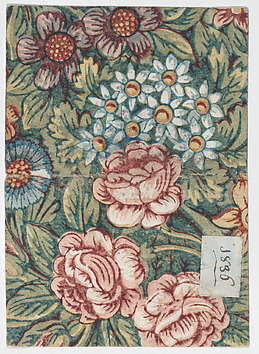
During the Victorian Era, sunflowers were the first choice for fabrics, tiles, and even wallpaper. At the end of the century, artists rediscovered Oriental motifs, which then initiated a renewed trend of Orientalism in fashion. This trend persisted until the beginning of World War II.
The 20th Century
In the roaring 1920s, silk floral straight-down or drop-waist dresses and kimonos were fashionable during the day in the streets and at night at home. The 1920s fashion, prepared the way for the petite, dainty all-over floral prints of the 1930s. World War II led to the rationing of fabrics and other essential materials for clothing production. Thus, simpler cuts and solids became popular.
The 1950s were all about Dior’s New Look. This means a cinched waist and a full skirt. Florals closely resembled their natural inspiration. Typically, girls and young women wore floral dresses. My great-grandma, nevertheless, wore the brightest and boldest dresses of this kind but was constantly criticized by friends and family for wearing what she liked. She was in her late 60s. During that time, only dark, solid dresses were deemed acceptable for her age group.
In the 1960s, pop art influenced many fashion designers. Bold, bright, vibrant, large floral prints became fashionable, especially on A-line mini dresses and headscarves in the mainstream. My German readers may remember the funny Pril flower stickers that were on the back of this brand’s dish liquid bottles.
In the Flower Power tribe, the patterns were taken from worldwide ethnic clothing and embroidery. Flowery accessories were a Must. Do you still remember Scott McKenzie‘s hit San Francisco? “… we sure to wear flowers in your hair.”
The 1970s brought more subtle, romantic prints. In the 1980s, floral clothes were bright and bold, but the motifs and cuts distinctly differed from those of the 1960s.
Contemporary Flower-Inspired Motifs
Today, abstract, stylized, exotic, and fantasy flowers are popular on a wide range of background colors. Floral dresses with sleeves are among the favorites of women in midlife to cover saggy upper arms. Today, you can wear floral prints year round. The motif occurs on all clothing items, from down coats to skirts, shirts, and even bras.
Full disclosure: I had a black satin bra with a pint of pink-red roses and leaves in two shades of green!
Accessories like scarves, bangles, and necklaces, as well as earrings featuring flowers, are popular among women with Romantic or Bohemian Style. Even bags and shoes are decorated with them.


The above OOTD features fantasy blossoms in yellow, tan, pink, and red on a black background of silk. The look is spring business casual. The large scale of the print and dark background, in combination with the classic top and cardigan, diminishes the association with romance, naivety, or girlishness. You can find a guide dedicated how to look ageless in floral prints over 40 at the link.
Stylish Monday linkup
My blogging friends and I are hosting a May Stylish Monday linkup party. Each of us features fresh flowers in her post and outfits. Note that the looks in the collage below are inspirations and not necessarily the outfit ideas featured in their posts. Thus, make sure to visit
Julie Augustyn at Fashion, Trends and Friends,
Suzanne Bell at Ask Suzanne Bell,
Andy Schwartz at Pearls and Pantsuits,
Emma at Style Splash,
Nancy Baten at Nancy’s Fashion Style,
Cindy Scurry at The Middle Sister Style Blog,
Michelle Clark at @seechele_styles
and Nina Bandoni at Sharing a Journey.

Click here to get to the online party
References
Döbler, Hannsferdinand, 1972. Kultur und Sittengeschichte der Welt – Kleidung, Mode, Schmuck. Bertelsmann Verlag, München, Germany.
Robinson, Julian, Calvey, Gracie, 2015. The fine art of fashion illustration. Francis Lincoln Limited. London.
Watt, Melinda. Textile Production in Europe: Silk, 1600–1800. In Heilbrunn Timeline of Art History. New York: The Metropolitan Museum of Art, 2000–.
Photos of me: G. Kramm
© 2013-2025 Nicole Mölders | All rights reserved


I am pinning this so I can go back and fully read. I love reading the history of fashion and you know I love florals. Usually larger patterns with a certain color palette. Your vibrant skirt is beautiful and I especially love it with the olive green.
take care,
jess xx
I like reading your posts, Nicole, they are full of interesting facts and visuals. This skirt of yours is very pretty and fits you perfectly. Lovely outfit
You are the best distance learning teacher EVER!!! Love your social studies lesson on floral prints throughout the ages! BTW, teacher, you rock in that ensemble! Happy Teacher Appreciation Day/Week to you, Nicole; but then again, we appreciate you all the time! Be well and stay safe!
I love reading the history behind the print! Your skirt is beautiful!
Jill – Doused in Pink
You always find out the most interesting history Nicole.I love it.
XOOX
Jodie
Nicole,
You’re spot on about how florals bring a sense of romance to an outfit. The rich colors of your skirt are fabulous. IMHO, florals are a gal’s BSFF (best style friend forever). Be well.
Rena
after reading this! i want to be Maria Luisa of Parma–oh my, gorgeousness!
please keep up with the fashion history! love it!
xo eva
I love your skirt and florals look good with grey hey!
I love your skirt so much Nicole. What a wonderful history on one of my favorite prints. Great post!
xx
Suzanne
I’m here for covering my flabby upper arms and your great grandmother sounds like a wonderful woman and an inspiration to us all!! Thank you for sharing all that wealth of information, Nicole!!
Donna 🧚🏻♀️❤️🐝